



A brain injury rarely arrives alone. It shows up with hospital bills, missed paychecks, and an insurance adjuster who wants a recorded statement before you have even seen a specialist. When someone else’s negligence is the reason you are hurt, Maryland law lets you recover for those losses, and the Baltimore brain injury lawyers at WGK Personal Injury Lawyers carry on that fight so you can focus on healing.
Contact our Baltimore law office today at (410) 837-2144 for a free consultation.
A traumatic brain injury, or TBI, is an injury that affects how the brain works.1 When another person or business caused that harm, the law allows you to recover damages for your medical care, your lost income, and the daily losses a brain injury leaves behind.
For nearly 50 years, our work has centered on one thing: recovering full and fair compensation for injured people in Baltimore. Call us for a free consultation about the specific facts of your case.
Table of Contents
How WGK Personal Injury Lawyers Can Help With Your Brain Injury Case
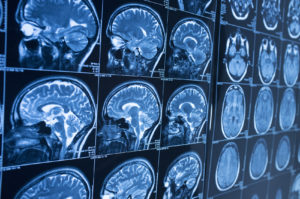
A brain injury claim is won on evidence and pressure, not paperwork. When you hire our personal injury lawyers in Baltimore, MD, here is what we actually do on your case.
Investigate the Accident and Preserve the Evidence
We move fast to lock down proof before it disappears. We investigate how the crash or fall happened, request any available video footage, photograph the scene, and gather the police report, witness accounts, and your medical records. Evidence fades, and footage gets overwritten, so the early work often decides what a case is worth later.
Fully Assess Your Damages
A brain injury claim is easy to undervalue, and if you demand too little, you end up paying part of your own care out of pocket. As soon as you hire us, we work with your medical records and your providers to value the full cost of the injury, from the bills you have today to the future care and lost earning power a Traumatic Brain Injury can cause.
Negotiate With the Insurance Company
Once your claim is underway, the at-fault driver’s insurer often opens with a low offer and waits to see if you push back. We build the demand around your evidence and your damages, then negotiate hard to move the number toward fair value. Our attorneys have dealt with Maryland insurance companies for years, and we put that experience to work for you.
Prepare to Take Your Case to Trial When Needed
If the insurer will not pay a reasonable amount, we file suit and try the case. Insurers track which firms actually go to trial, so a credible willingness to put your case in front of a jury changes how seriously the carrier negotiates. We have represented Baltimore residents in court for years, and we are ready to do the same for you.
Our firm has been in practice for nearly 50 years. Our attorneys bring nearly 100 years of combined attorney experience to the table. We have recovered over $100 million for our clients.
The case results described on this website are specific to the facts and legal circumstances of each individual matter and should not be taken as a representation, promise, or guarantee that you will achieve a similar result. Prior results do not guarantee or predict a similar outcome in any future case. Every case is different and must be evaluated on its own merits. The amounts shown reflect gross recoveries before the deduction of attorneys’ fees, costs, and expenses. This website is attorney advertising.
This is marketing material and is not legal advice. Every case is unique and laws change frequently. Please contact our office to speak with an attorney about your specific situation before making any legal decisions.
Injured, Hon? We can help.
Free consultation. You pay nothing unless we win.
When to Call a Baltimore Brain Injury Lawyer
Call a lawyer any time someone else’s negligence caused a head injury, even one that looks minor at first. A mild TBI or concussion is caused by a bump, a blow, or even a jolt to the head, or by a hit to the body that makes the head and brain move quickly back and forth.1
Most brain injuries are not the worst-case kind. More than 70% of all traumatic brain injuries are classified as mild, commonly called concussions.2 But "mild" is a clinical label, not a measure of how the injury affects your life. The threshold for calling a lawyer is much lower than most people assume.
Timing matters for your health and for your claim, so see a doctor right away. According to attorney Mary Finke, insurance carriers begin to discount a claim when the first treatment is delayed beyond three to five days. A gap of 10 to 14 days or more can put the claim at risk. A concussion or TBI may not be diagnosed on day one, which is one more reason to get checked and to call a lawyer early.
This commentary reflects experience in past matters. It is marketing material, not legal advice, and past results do not guarantee future outcomes.
Common Types of Brain Injuries in Baltimore
Any brain dysfunction caused by an external force can be classified as a traumatic brain injury. Most injuries of this kind fall into one of two categories, and the category often determines the medical bills and the long-term prognosis that affect a claim’s value.
Open Head Injuries
Open head injuries happen when the skull is struck forcefully and penetrated by an external force. Some of the injuries in this category include:
- Basilar skull fractures
- Depressed skull fractures
- Linear skull fractures
- Diastatic skull fractures
These injuries often require extensive surgery to treat and may leave victims with lifelong health challenges.
Closed Head Injuries
Closed head injuries happen when an external force causes the brain to rattle inside the skull and become damaged. Some of the injuries in this category include:
- Concussions
- Cerebral contusions
- Intracranial hematomas
- Diffuse axonal injuries
While concussions can often be treated with rest, intracranial hematomas often require emergency surgery to save the victim’s life.
Short-Term and Long-Term Symptoms of Brain Injuries
In the days and weeks after a head injury, a person may have many short-term symptoms, such as:
- Headaches
- Nausea
- Dizziness
- Sleep problems
- Blurred vision
- Ear ringing
- Mood swings
If the brain injury is severe, or the person does not get medical care in time, they may also have long-term symptoms, like:
- Blindness
- Deafness
- Seizures
- Facial paralysis
- Loss of inhibition
- Loss of self-control
- Reading and writing difficulties
For serious injuries, the effects can last a lifetime. The CDC reports that moderate and severe traumatic brain injury can lead to lasting physical, cognitive, emotional, and behavioral changes that affect a person’s ability to function in everyday life. It also reports that cognitive changes are among the most common, most disabling, and longest-lasting effects.3 These are the changes that matter most when we value your claim.
How Are Brain Injuries Treated?
Once a person is diagnosed with a brain injury, their doctor builds a treatment plan designed to help them reach the point of maximum medical improvement.
Some of the most common treatments for brain injuries include:
- Rest
- Oxygen
- Diuretics
- Anti-seizure medication
- Coma-inducing medication
- Surgery
- Occupational therapy
- Vocational counseling
The mix of treatments tracks the severity of the injury, and the most severe brain injuries are treated at the highest level of trauma care. The R Adams Cowley Shock Trauma Center in Baltimore is dedicated to treating the critically sick and severely injured.4 If your injury was serious enough to send you there, you are likely dealing with catastrophic harm and a long recovery, and the size of that medical record has a major impact on the value of your claim.
Common Causes of Baltimore Brain Injuries
Brain injuries usually stem from a few common events. Falls are the leading cause of TBI-related hospitalizations, accounting for 49.1% of those hospitalizations in national surveillance data, and motor vehicle crashes are second at 24.5%.5
We handle both kinds of accidents every day.
Slips and Falls
When Baltimore residents slip and fall on a wet or icy floor, they often hit their head against the ground and suffer traumatic brain injuries. The same is true when they fall from roofs and other elevated places. These cases usually turn on whether a property owner let a known hazard sit too long.
Auto Accidents
Car accidents, truck accidents, and other crashes often throw drivers and passengers against solid objects like the steering wheel or the dashboard. When these collisions happen, brain injuries are common. This is especially true when pedestrians or cyclists are involved.
Across Maryland, motor vehicle crashes injure tens of thousands of people every year,6 and as the national data above shows, those crashes are a leading cause of TBI hospitalizations.
Sporting Accidents
Thousands of Baltimore residents play sports like football and hockey regularly. Most of the time, these sports are a chance to stay fit and have fun. But when two players collide, or someone is struck by a piece of equipment, head injuries can happen.
Workplace Accidents
Workers suffer traumatic brain injuries on construction sites and in factories throughout Maryland. These injuries are often caused by explosions and by objects falling from above and striking a worker in the head.
Medical Malpractice
Babies suffer traumatic brain injuries at the hands of medical professionals with troubling regularity. They are usually injured during the birthing process when a doctor or nurse improperly uses a vacuum extractor or forceps. These errors are classified as medical malpractice.
Types of Brain Injury Cases We Handle
A TBI can come from almost any serious accident. Brain injury cases reach our office through many doors. We treat every brain injury as a potential catastrophic injury case and staff it accordingly.
We regularly handle brain injuries that arise from:
- Catastrophic injuries, where the harm is permanent and life-altering
- Construction accidents, including falls from height and struck-by-object injuries
- Defective machinery on the job
- Falls on dangerous property, including broken sidewalk and walkway hazards
- Child injuries, where a young brain is still developing
- Electric scooter and bicycle crashes
This list is not exhaustive. If your brain injury came from an accident someone else caused, we want to hear about it.
Who Can Be Held Liable for a Brain Injury
Who pays for a brain injury depends on how it happened. A crash usually points to the at-fault driver. A fall often points to the property owner who let a hazard sit too long. A workplace injury can fall on an employer or an equipment maker. When a government entity is at fault, special rules apply.
More than one party can share responsibility. A truck crash can involve both the driver and the company behind the truck. A fall can involve both a property owner and a management company. We identify every party that may owe you money and every insurance layer behind them, because each additional policy can mean more available compensation for your recovery.
If a government vehicle or public property caused your injury, act fast. Claims against Maryland local government entities require written notice within 1 year of the injury, well before the general filing deadline. Waiting too long on a government claim can bar your recovery entirely.
Calculating the Value of Maryland Brain Injury Lawsuits
The amount paid to Baltimore residents who suffer brain injuries varies a great deal from case to case. In most cases, the size of the recovery is tied to the severity of the injury. The longer-lasting and more life-altering the injury, the larger the recovery tends to be.
When our attorneys work on brain injury cases, we pursue compensation for damages such as:
- Medical bills
- Rehabilitative care costs
- Pain and suffering
- Mental anguish
- Lost wages
- Loss of future earning capacity
Pain and suffering damages cover both the physical pain and the limitations the injury forces on your daily life. For a brain injury, that often means the cognitive and behavioral changes the medical records cannot fully show: trouble concentrating, memory problems, mood changes, and the activities you can no longer do.
The dominant cost of a brain injury is this loss of quality of life. One study reported that U.S. traumatic brain injuries in a single year generated an estimated $758 billion in lifetime costs, with 83.3% of that representing quality-of-life losses.7 That is the part of your recovery that gets overlooked unless someone builds the case to prove it.
Maryland Law: Statute of Limitations, Damages Cap, and Contributory Negligence
Three Maryland rules shape almost every brain injury case. Knowing them early protects your claim.
Statute of limitations. Maryland generally requires civil personal injury actions to be filed within three years from the date the claim accrues.8 For most brain injury cases tied to a single event, the practical effect is a three-year window from when the harm took place. Claims against local government entities require written notice within one year, so government cases move on a much shorter timeline.
The damages cap. Maryland caps non-economic damages in every personal injury case, including catastrophic brain injury and wrongful death. There is no carve-out that exempts auto, premises, or any other case type. The cap is $980,000 per injured person for causes of action arising October 1, 2026 through September 30, 2027 ($965,000 for those arising October 1, 2025 through September 30, 2026), rising to $1,470,000 ($1,447,500 for the 2025-26 cap year) in wrongful death cases with two or more beneficiaries.9 The cap that applies is set by the date of the accident, not the date the lawsuit is filed, and it increases each October 1. Economic damages, such as medical bills and lost wages, have no statutory limit.
Contributory negligence. Maryland follows pure contributory negligence: a plaintiff who is even 1% at fault for an accident is generally barred from any recovery. But being negligent is not the same as being contributorily negligent. Under Maryland case law (Myers v. Bright), your negligence has to have contributed to causing the crash or the injuries before it can bar your claim. We fight hard to defeat contributory negligence arguments and protect your right to recover.
How Insurance Works in a Brain Injury Claim
Most brain injury claims are paid by an insurance company, and the company’s interests are not the same as yours. Several insurance policies can come into play after a serious crash, and how each carrier handles those coverages matters as much as what the policy says on paper.
Maryland personal injury protection (PIP) is a no-fault benefit, typically up to $2,500 in medical bills and lost-wage reimbursement, available regardless of who caused the accident. Maryland auto policies include PIP unless the first named insured waives it in writing (Md. Code, Ins. §§ 19-505 and 19-506). If the at-fault driver has too little coverage, your own underinsured motorist coverage may help, but only after the at-fault driver’s liability policy has been paid out in full.
How those same coverages play out depends heavily on the carrier on the other side.
Beyond carrier tactics, the policy itself sets a hard ceiling. Policy limits cap what an insurance company will pay, regardless of how serious the brain injury is, which is why we investigate every available policy and every responsible party.
Your Trusted Brain Injury Lawyer in Baltimore
The lawyers at WGK Personal Injury Lawyers have helped Baltimore residents fight for compensation for their brain injuries for many years, and we have achieved strong results for our clients. If you would like us to represent you, contact our Baltimore personal injury office. We also serve clients across the state through our Maryland brain injury practice.
Our personal injury lawyers in Baltimore, MD also handle:
- Car accident cases in Baltimore, MD
- Slip and fall accident cases in Baltimore, MD
- Baltimore, MD dog bite cases
- Bicycle accident cases in Baltimore, MD
- Baltimore, MD aviation accident cases
Frequently Asked Questions
What is a traumatic brain injury?
A traumatic brain injury, or TBI, is an injury that affects how the brain works.1 It can result from a blow to the head or from a hit to the body that makes the head and brain move quickly back and forth. TBIs range from mild concussions to severe, life-altering injuries.
Can you have a brain injury without hitting your head or losing consciousness?
Yes. A concussion can happen when a hit to the body makes the brain move rapidly inside the skull, even with no direct blow to the head.1 Because most TBIs are mild,2 symptoms can be easy to dismiss at first. See a doctor if you feel off after any crash or fall.
Is a concussion really a brain injury?
Yes. A concussion is a mild traumatic brain injury. "Mild" is a medical label, not a promise that the effects will be minor. Research shows that 14% of children with a mild TBI still experience ongoing disability.10 A concussion deserves real medical attention and can support a real claim.
What is a brain injury case worth?
There is no fixed value. The amount depends on the severity of the injury, how long you treat, how fully you recover, and the available insurance limits. Economic losses, such as medical bills and lost wages, have no statutory cap, while non-economic damages are limited by the Maryland cap described above. A Baltimore brain injury lawyer can review your records and give you an honest assessment.
Is there a cap on what I can recover for a brain injury in Maryland?
Yes, on non-economic damages. See the Maryland Law section above for the current cap figures and the rule that the accident date controls which cap applies. For severe TBI, this matters more than in most cases, because the human losses, including lost cognitive function, personality changes, and lost independence, can far exceed what the statute allows for pain and suffering. We build out the economic side of the case aggressively, because medical bills, lost wages, and future earning capacity have no statutory limit.
How long do I have to file a brain injury claim in Maryland?
The general deadline is three years from the date of injury, with a much shorter one-year notice requirement for claims against local government. For a brain injury specifically, the practical timeline is tighter than the headline number, because catastrophic TBI cases often require months of neuropsychological testing and expert review of imaging before suit can be filed responsibly. Calling early protects that lead time and lets us investigate liability while the evidence is still fresh.
What are the most common causes of brain injuries?
Falls and motor vehicle crashes lead the national hospitalization data, as the Common Causes section above breaks down. We handle brain injuries from falls, vehicle crashes, workplace accidents, sports collisions, and birth-related medical errors across Baltimore City and the surrounding Maryland counties. If your case fits any of those patterns, it fits ours.
What long-term effects can a brain injury cause?
A serious TBI can cause lasting physical, cognitive, emotional, and behavioral changes, as described in full in the symptoms section above. Those changes also affect case value, because cognitive losses are often what medical records cannot fully capture. That gap is where a brain injury claim is won or lost, because pain and suffering damages cover those daily limitations even when imaging looks unremarkable.
Who can be held responsible for a brain injury?
It depends on how the injury happened, and more than one party can share fault. The Who Can Be Held Liable section above lays out the full framework. The point worth flagging here is that if a public vehicle or public property was involved, the much shorter one-year government notice deadline applies, so call right away.
How much does a brain injury lawyer cost?
WGK works on a contingency fee. When there is a recovery, the case costs we advanced are reimbursed to us out of the gross settlement. If there is no recovery, you owe no fee and no costs. The fee increases when suit is filed, not when a case goes to trial. You pay us only out of a recovery, so there is no risk in calling for a free consultation.
Why does early medical treatment matter for a brain injury claim?
Early care protects both your health and your claim. According to attorney Mary Finke, insurers begin discounting cases when treatment is delayed beyond three to five days. A concussion or TBI may not be diagnosed on day one, so prompt evaluation creates important early evidence linking your injury to the accident.
This commentary reflects experience in past matters. It is marketing material, not legal advice, and past results do not guarantee future outcomes.
Do I have to come into the office if I have a brain injury?
No. Most of a personal injury case can be handled by phone. We can review and sign documents remotely and mail your settlement payment to you once the case is resolved.
Schedule a Free Consultation With a Baltimore Brain Injury Lawyer
A brain injury can change everything, and you do not have to face the insurance company alone. The Baltimore brain injury attorneys at WGK Personal Injury Lawyers are ready to review your case for free and explain your options in plain English.
You pay nothing unless we win. Our firm has fought for injured Maryland families for nearly 50 years, with attorneys who bring nearly 100 years of combined attorney experience.
Call (410) 837-2144 or reach us through our contact page to get your free Baltimore brain injury case review. You can also visit our main office at 14 W. Madison Street, Baltimore, MD.
Prior results do not guarantee a similar outcome. Every case is different and is decided on its own facts. Amounts shown are gross recoveries before fees and costs. Attorney advertising.

Sources
- Centers for Disease Control and Prevention (CDC), 2024. “About Traumatic Brain Injury”. TBI definition and concussion mechanism. https://www.cdc.gov/traumatic-brain-injury/about/index.html
- National Academies of Sciences, Engineering, and Medicine (NCBI Bookshelf NBK580076), 2022. “The Scope and Burden of Traumatic Brain Injury”. More than 70% of TBIs are classified as mild. https://www.ncbi.nlm.nih.gov/books/NBK580076/
- Centers for Disease Control and Prevention (CDC), 2024. “Moderate to Severe Traumatic Brain Injury is a Lifelong Condition”. Lasting physical, cognitive, emotional, and behavioral changes. https://www.cdc.gov/traumaticbraininjury/pdf/moderate_to_severe_tbi_lifelong-a.pdf
- University of Maryland Medical Center, 2026. R Adams Cowley Shock Trauma Center. Dedicated to treating the critically sick and severely injured. https://www.umms.org/ummc/health-services/shock-trauma
- National Academies of Sciences, Engineering, and Medicine (NCBI Bookshelf NBK580076), 2017. Falls and motor vehicle crashes are the leading causes of TBI-related hospitalizations in the United States. https://www.ncbi.nlm.nih.gov/books/NBK580076/
- Zero Deaths Maryland (Maryland Department of Transportation / Maryland Highway Safety Office), 2023. Crash Data for Maryland. Statewide totals for crashes and people injured. https://zerodeathsmd.gov/resources/crashdata/
- Lawrence et al. (2018), as reported in National Academies of Sciences, Engineering, and Medicine (NCBI Bookshelf NBK580076). U.S. TBIs in 2012 generated an estimated $758 billion in lifetime costs, 83.3% of it quality-of-life losses. https://www.ncbi.nlm.nih.gov/books/NBK580076/
- Maryland General Assembly. Md. Code, Cts. & Jud. Proc. § 5-101. Three-year statute of limitations for civil actions. https://mgaleg.maryland.gov/mgawebsite/laws/StatuteText?article=gcj§ion=5-101
- Maryland General Assembly. Md. Code, Cts. & Jud. Proc. § 11-108. Maryland’s non-economic damages cap statute. See the Maryland Law section above for the cap figures, the accident-date-binding rule, and the wrongful-death multiplier. https://mgaleg.maryland.gov/mgawebsite/laws/StatuteText?article=gcj§ion=11-108
- National Academies of Sciences, Engineering, and Medicine (NCBI Bookshelf NBK580076), 2022. More than 62% of children with moderate-to-severe TBI, and 14% of those with mild TBI, experience ongoing disability. https://www.ncbi.nlm.nih.gov/books/NBK580076/