


WGK Personal Injury Lawyers | April 1, 2026 | Truck Accidents
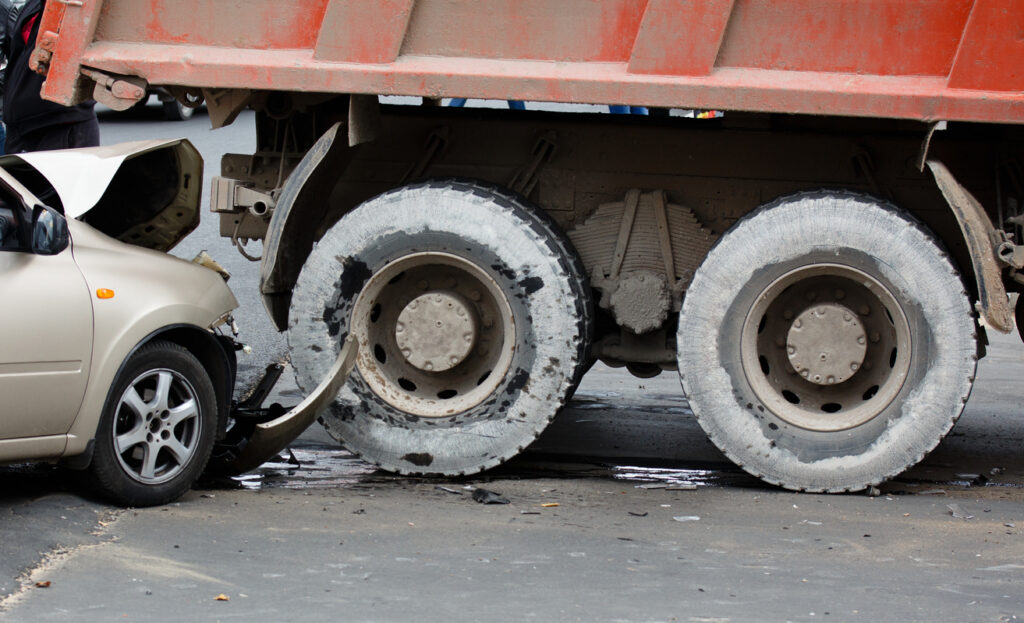
When you’re sharing the road with large commercial trucks in Baltimore, safety is always a top concern. One critical, yet often overlooked, safety feature on these vehicles is the Mansfield bar. While these bars are designed to prevent serious accidents, they can sometimes fail, leading to devastating consequences for drivers.
Understanding what Mansfield bars are, how they work, and the risks they pose can help you stay safer on the road.
What Is a Mansfield Bar?
A Mansfield bar, also known as an underride guard, is a metal bar mounted on the rear of large trucks and trailers. Its purpose is to prevent smaller passenger vehicles from sliding underneath the truck in the event of a rear-end collision.
The term “Mansfield bar” comes from a tragic 1967 accident involving actress Jayne Mansfield, whose car slid underneath a tractor-trailer, resulting in fatal injuries. Following this incident, federal regulations required most commercial trucks to install rear underride guards to reduce the severity of similar crashes.
How Mansfield Bars Are Supposed to Protect Drivers
In a typical rear-end collision, a Mansfield bar is meant to stop a passenger vehicle at the level of its front bumper or hood. This helps ensure that the vehicle’s crumple zones and airbags can do their job, significantly reducing the risk of severe head or neck injuries.
When properly designed and maintained, these bars can be life-saving. However, not all Mansfield bars perform as intended, especially in high-speed collisions or when they are poorly constructed or damaged.
The Dangers of Mansfield Bars
Despite their intended purpose, Mansfield bars can present serious dangers under certain conditions.
Some of these dangers are:
- Structural failure: Not all underride guards are built to withstand the force of a collision. In some cases, the bar can bend, break, or detach entirely, allowing a vehicle to slide underneath the truck anyway. This type of failure can lead to catastrophic injuries or fatalities.
- Inadequate standards: Federal safety standards for Mansfield bars have historically been criticized as insufficient. While updates have been made over the years, some bars still do not provide adequate protection in real-world crash scenarios, especially at highway speeds common around Baltimore’s beltways and interstates.
- Improper installation or maintenance: If a Mansfield bar is improperly installed or not regularly inspected, it may not function as intended. Corrosion, loose bolts, or prior damage can weaken the structure, increasing the risk of failure during an accident.
- Limited coverage: Rear underride guards do not address side underride risks. Many serious accidents occur when a passenger vehicle slides under the side of a trailer during a turn or lane change, a scenario that Mansfield bars do not prevent.
Taken together, these risks highlight that Mansfield bars are not a foolproof safety measure, and when they fail or fall short, the consequences for unsuspecting drivers can be severe and life-altering.
Why This Matters for Baltimore Drivers
Baltimore’s busy roadways see heavy commercial truck traffic every day. With congestion, sudden stops, and complex interchanges, the risk of rear-end collisions is heightened.
When a Mansfield bar fails in these situations, the consequences can be severe. Victims of underride accidents often suffer traumatic brain injuries, spinal cord damage, or fatal injuries due to the intrusion of the truck into the passenger compartment.
Who May Be Liable in a Mansfield Bar Accident?
If a Mansfield bar fails and contributes to injuries, multiple parties may be held responsible, including:
- Truck drivers, if negligence contributed to the crash
- Trucking companies, for failing to maintain equipment
- Manufacturers, if the underride guard was defectively designed or built
- Maintenance providers, if improper repairs or inspections occurred
Determining liability in these cases can be complex and often requires a thorough investigation, including accident reconstruction and review of maintenance records.
Protecting Yourself on the Road
While you can’t control how a truck is equipped or maintained, there are steps you can take to reduce your risk:
- Maintain a safe following distance behind large trucks
- Avoid lingering in blind spots
- Stay alert in heavy traffic and during sudden slowdowns
- Be especially cautious at night or in poor weather conditions
By staying proactive and practicing defensive driving habits, you can significantly reduce your chances of being involved in a dangerous underride accident.
Contact a Baltimore Truck Accident Lawyer at WGK Personal Injury Lawyers for a Free Consultation
If you or a loved one has been injured in a truck accident involving a Mansfield bar, don’t wait to explore your legal options. The team at WGK Personal Injury Lawyers can investigate your case, determine liability, and fight for the compensation you deserve. Contact a trusted Baltimore truck accident lawyer today for a free consultation.
WGK Personal Injury Lawyers
14 W Madison St, Baltimore, MD 21201, United States
(410) 837-2144
WGK Personal Injury Lawyers – Dundalk Office
7329 Holabird Ave Suite 3, Dundalk, MD 21222
By appointment only
(410) 970-3080
WGK Personal Injury Lawyers – Largo Office
1401 Mercantile Ln Suite 500-M, Largo, MD 20774
By appointment only
(410) 837-2144